

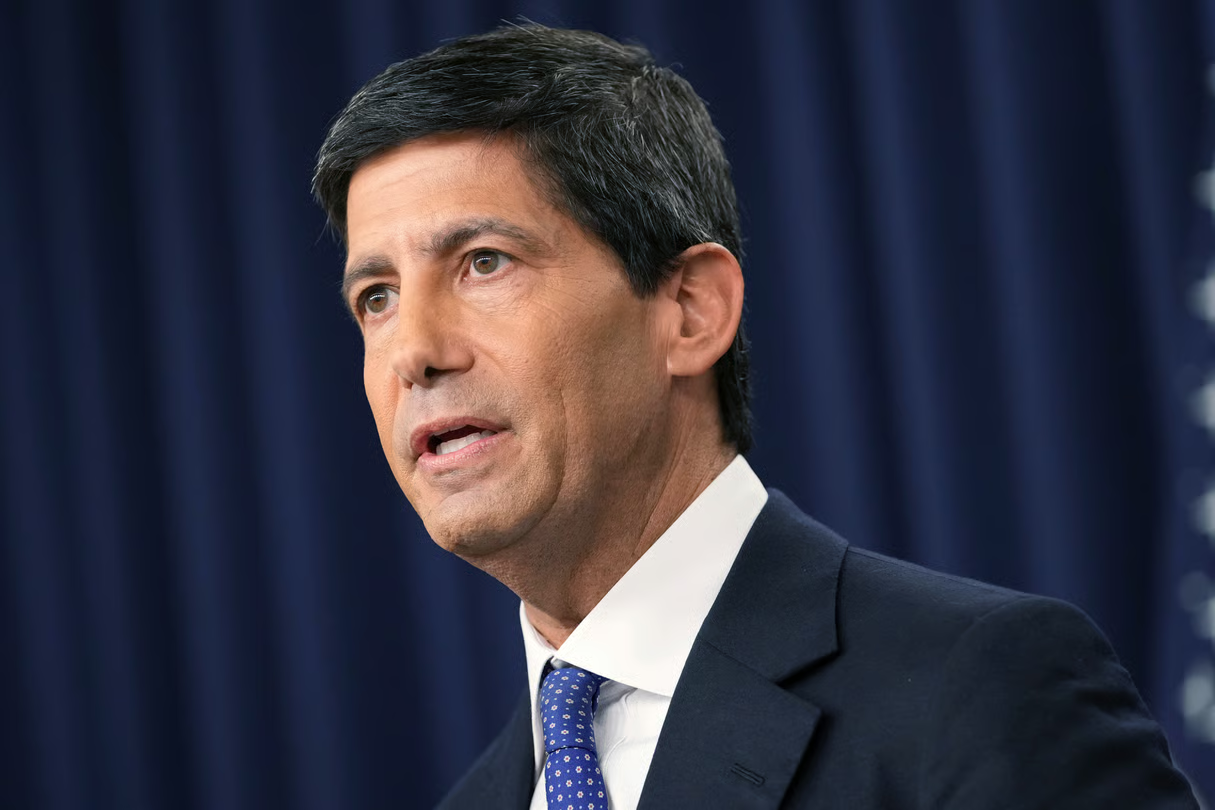

The Federal Reserve is raising interest rates for the first time in three years, which likely means higher borrowing costs for Georgia families and businesses.
“Inflation remains elevated,” Fed Chair Kevin Warsh said on Wednesday.
“Today’s policy action will support a timelier return to the committee’s 2% goal,” he added.
A quarter-point increase lifts the Fed’s key rate to a target range of 3.75-4%. Georgia businesses and consumers could face higher borrowing costs for home purchases, car loans and credit cards down the road.
The Fed is aiming to cool the economy and reduce upward pressure on prices brought on by skyrocketing fuel prices.
Local economists weigh in on what’s next
Ray Hill is an economist at Emory’s Goizueta Business School. He says today’s decision is a promising sign for the future.
“It means that the first major decision by the new Fed chairman is something we should all applaud. It demonstrates that the Fed is gonna continue to behave independently of politics,” says Hill.
Warsh, a nominee of President Donald Trump, became chair in May. Trump has long pressured the Fed to cut rates, not raise them.
Hill says if we continue to see the core inflation rate fall and we have some stability in the Middle East, he doesn’t expect further rate hikes, and maybe even some decreases.
However, he says the Fed’s decision won’t change much in the near term, like lending rates to buy a home.
“We’ve seen in the past that it’s not even clear that the mortgage rate is going to be affected by this, and in fact mortgage rates are already around 7%. They’re already high in anticipation of that because they’re driven by factors that are very different from what happens to short-term interest rates,” says Hill.
More Fed rate hikes could be coming
Rajeev Dhawan leads the Economic Forecasting Center at Georgia State University.
“The way the market reacted today, the stock market, as expected, went down because when you raise the rates, you’re trying to slow the economy, which means there’s going to be less sales, less profit, which means the stocks in the future are gonna be priced lower,” said Dhawan.
He says further rate increases by the Federal Reserve could be possible.
“They’re not done; they will come back again, and they may have to go harder to control inflation,” said Dhawan.
This story is available through a news partnership with WABE, Atlanta’s National Public Radio affiliate.
