
Georgians working in archaeology and historic preservation say a federal bill could get rid of requirements to find and preserve historical resources during some development projects.
The U.S. Senate is expected to vote as soon as next week on the Bipartisan American Affordability and Jobs Act, a bill aimed at permitting reform. If passed, it still needs to make it through the U.S. House of Representatives.
Supporters of the legislation say it would speed up much-needed development for energy and infrastructure projects in the country, from power plants to transmission lines to wind farms. But critics are worried about impacts to archaeological and environmental resources – and about the jobs of people who study those potential impacts.
“We cannot express our concern deeply enough,” the Georgia Trust for Historic Preservation shared in a written statement.
What requirements are part of Section 106?
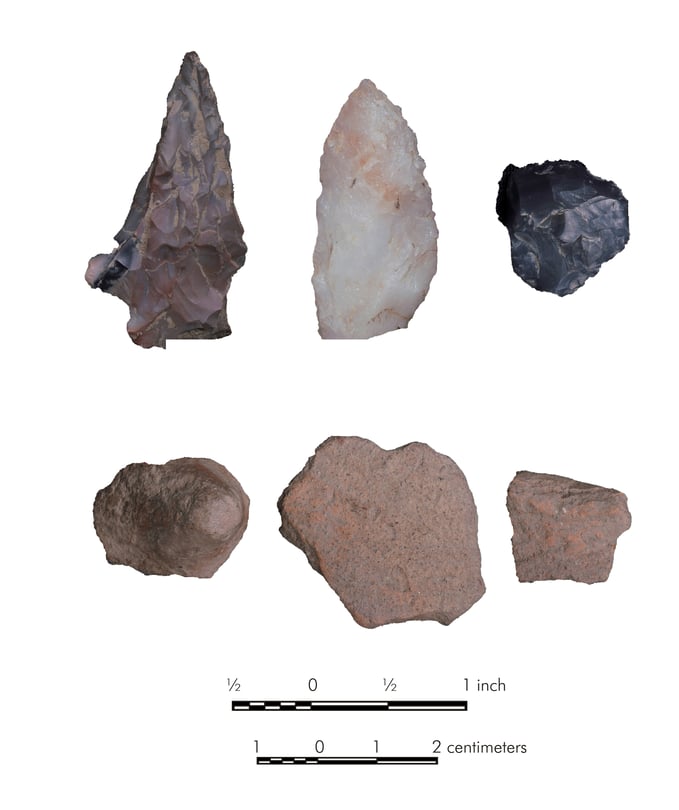
When federal money is used to build a project—like a highway or bridge—a section of the National Historic Preservation Act of 1966 requires the site to be checked for historic items like military artifacts, Indigenous tools or ceramics, or places like burial sites, battlefields, or Indigenous homesites.
It also requires mitigation for any impacts to the historic site, like excavating and moving the artifacts or shifting the project away from the site. The law only applies only to projects using federal money, such as highway expansions, not private or state-funded developments.
“It’s the 106th section of the of the law, which created a process to identify archaeological sites and historic structures and other resources — so cemeteries and battlefields and downtowns,” said Maureen Myers from New South Associates, a Georgia-based cultural resources management firm.
The law also created the National Register of Historic Places. But Myers said Section 106 is where the law has its teeth.
She estimates 10,000 to 15,000 archaeologists nationwide work on projects stemming from this law’s requirements, with several firms in Georgia, as well as historians, resource managers and others.
What is happening to Section 106?
The U.S. Senate is expected to vote as soon as next week on the Bipartisan American Affordability and Jobs Act, a bill aimed at permitting reform.
A bipartisan group of senators – Martin Heinrich (D-N.M.), Mike Lee (R-Utah), Shelley Moore Capito (R-W.Va.) and Sheldon Whitehouse (D-R.I.) – introduced the bill, to ease the permitting process for energy and infrastructure projects, from power plants, to transmission lines, to solar farms.
The senators say lengthy and costly permitting and environmental review processes are bogging down development.
“We have an enormous opportunity to build big things again to meet this moment – to build more generation, expand our grid, create more jobs, lower energy costs, and make sure we have the energy we need to compete,” Senator Heinrich wrote in a press release. “It should not take decades to build the infrastructure our country needs.”
The bill has notably split climate and environment advocates, who are debating between building more renewable energy projects and stemming Trump Administration environmental deregulation.
Opposition to changes
While changing the language of section 106 is intended to speed up development, Myers said the archaeological surveys she and others complete are not lengthy, and rarely hold up projects.
She said crews spend a few days on-site, and then usually take about 40 hours to write and submit a report. The vast majority of cases — around 95 to 97% — Myers said go through under the 30-day window the policy requires.
Functionally, Myers said the change in language of section 106 would decrease by about 80% the number of sites reviewed in Georgia by archaeologists. It does that by narrowing the definitions of historic properties. It would also scrap a requirement for public comment. And Myers said the bill reduces neighbors’ ability to alert authorities to potential historic sites, and “federal tribes’ voices will be really cut out of the conversation almost completely.”
The Georgia Trust for Historic Preservation wrote that this federal regulation has “provided an opportunity for Georgia communities to have a voice in identifying and protecting their historic places — battlefields, historic districts and individual landmarks — before federal projects commenced.”
Other organizations like The American Institute of Architects, The Organization of American Historians and Society of American Archeologists have also come out against the rule change.
This story is available through a news partnership with WABE, Atlanta’s National Public Radio affiliate.