


– March 29, 2023 –
Capturing regulators
In its latest report out earlier this month, the Intergovernmental Panel on Climate Change reiterated that urgency of stepping away from fossil fuels as quickly as possible to avoid the worst effects of climate change.
But if utility regulators in the US are hearing that message they’re not always heeding it, especially about natural gas. A report from Grist offers insight into why that is. The natural gas industry works hard to cozy up to regulators, like those on Georgia’s elected Public Service Commission, reports Grist’s Emily Pontecorvo.
Pontecorvo takes us to the November meeting of the National Association of Regulatory Utility Commissioners in New Orleans. Georgia PSC Commissioner Tim Echols attended the conference and discussed how Georgia was bracing for price increases and embracing natural gas.
“We just approved another six natural gas plants, Echols told conferencegoers. “We haven’t hedged as much as you guys have. I wish we had.”
During the NARUC conference the American Gas Association threw a “Big Easy Bash” party at a concert venue around the corner from the conference building. There were free drinks and a cover band. As partygoing regulators danced, TV screens around the venue cycled through an American Gas Association presentation of slides with headings like “Natural Gas is Essential for Improving our Environment.”

Win for Sapelo descendants
The descendants of people enslaved on Sapelo Island learned late in the process that HB 273, which changes the makeup of the Sapelo Island Heritage Authority, was making its way through the General Assembly this session.
Their fear: They would lose a voice in making decisions about the rapidly gentrifying island. Community partners Sapelo Island Cultural And Revitalization Society, Inc. (SICARS), Save Our Legacy Ourself, Hog Hammock Community Foundation and One Hundred Miles’ Justice Strategist and Sapelo descendant Josiah “Jazz” Watts mobilized and ultimately reshaped the bill.
Last week, HB 273 unanimously passed through the State Senate with the Sapelo Descendants’ proposed amendments: that “resident” appointees to the Sapelo Island Heritage Authority be “two residents…who are direct descendants of the slaves of Thomas Spalding” and the Governor, “or his or her designee…shall be a state-wide elected official or a state agency representative serving under the Governor.”

The math on an EV tax
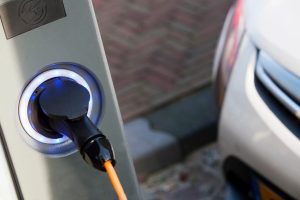
The 56,200 electric vehicles registered in Georgia are getting some unwanted attention in the form of additional tax passed Monday by the General Assembly, as Capitol Beat’s Dave Williams reports. Peach State EV owners already pay a flat tax of $211 a year. Now lawmakers are adding a 2.84 cents per kilowatt hour tax on electricity “pumped” at public charging stations to capture the tax from out-of-state EV drivers, too. The tax is reduced from the originally proposed 3.47 cents, which was poised to make Georgia EVs the most heavily taxed in the nation.
State Senate Majority Leader Steve Gooch was the senate sponsor of the 2015 transportation bill that established the annual EV registration fee, the second highest in the county. The legislation doesn’t explain how this figure was derived as a gas tax substitute. In defending the flat tax Gooch claimed he paid over $1,000 last year in gas tax, driving his pickup 30,000 miles and would have been better off paying a $200 flat tax. But it would’ve been nearly impossible to pay that much in gas tax last year. Georgia had a gas tax holiday from March 18, 2022 through Jan. 10, 2023. Federal tax was 18.4 cents per gallon. His truck would have had to get less than 7 miles per gallon to pay $1000.
Public Service Commission candidate Patty Durand noted on Twitter that she had taken Gooch to task on this claim, but he’s still repeating it. “You don’t compare driving the worst possible vehicle in terms of air pollution and mileage an insane amount of miles to the best possible vehicle in terms of zero air pollution that 99% of drivers with normal mileage of 12,000/year,” she tweeted.
If Gov. Brian Kemp signs the EV tax bill as expected it will go into effect in 2025. It doesn’t apply to home charging, but does pose a problem for municipalities and businesses that offer free charging. They’ll have to remove that service or cough up the road tax themselves.

Also noted
• The logging industry altered a Glynn County marsh in the 1930s to make it easier to transport timber, WABE/Grist’s Emily Jones reports. Now a joint state and federal project has restored a portion of the salt marsh near Dover Bluff, filling in the cuts with riprap to restore natural water flows.
• While increasing taxes on electric vehicles, Georgia lawmakers are also looking to protect gas-powered leaf blowers. SB 145 would prevent local governments from restricting the use of gas-powered leaf blowers, which are noisier and more polluting than their electric counterparts.
• State Rep. Lynn Smith, R- Newnan, chairs the House Natural Resources Committee, where a bill to protect the Okefenokee Swamp from mining on nearby Trail Ridge languishes without a vote despite garnering enough signatures – 91 – to all but guarantee it would fly through a floor vote. A similar bill died in Smith’s committee last year. Still, Smith told the Macon Telegraph she didn’t like being hurried.
“My job is to make sure my committee members have the information they need. And I have never been rushed on an issue,” Smith said. “If somebody pushes me, I slow down. You know, that tells me something else is going on. And I want the committee to be informed, that’s my job. They will vote if and when this bill comes back or another bill is introduced or no bill is introduced.”
If you have feedback, questions, concerns, or just like what you see, let us know at thecurrentga@gmail.com.

How the natural gas industry cozies up to utility regulators
Utility commissioners from around the country listen when natural gas utility executives speak.

Taxes could toss sand in gears of Georgia governor’s drive to become electric vehicle capital
Electric car and truck owners are concerned that a similar motor fuel levy would be a double tax on top of the yearly $214 registration fee for small battery-powered cars and the $320 paid by owners of commercial electric vehicles.
Georgia lawmakers send EV bill to governor
The final version of the legislation imposes a tax of 2.84 cents per kilowatt hour, down from 3.47 cents, as lawmakers responded to complaints that Georgia was poised to charge the highest excise tax on EVs in the nation.

After decades, project to fix a Camden County salt marsh shows early results
On the southern end of the Georgia coast, old scars left in the marshes by the logging industry are starting to heal, thanks to new federal funds. Officials announced the completion of the first stage of the project Friday.

Leaf blower protection bill heads back to Senate
Sponsors say bill will protect landscaping businesses from having to spend money on tools he says are inferior.
Support non-partisan, solutions-based investigative journalism without bias, fear or favor on issues affecting Savannah and Coastal Georgia.
WITH GENEROUS SUPPORT FROM


You must be logged in to post a comment.