


Sunday Reads – March 20, 2022
Welcome to the day that officially ends the green season characterized by St. Patrick’s Day and pollen. But the legislative season still dominates Georgia news — after all, your elected state representatives only meet 40 days a year. Holding them accountable for their votes is a year-round job for all of us. We also bring examples today of how some governmental creativity may just make family outlooks brighter and healthier.
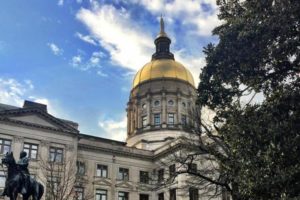
Legislature starts to focus
Crossover Day is done and now lawmakers have essentially narrowed the field of bills from hundreds to fewer than they had — we say that because even dead measures can rise if they are attached to a live bill that’s passed at least one chamber with somewhat similar goals or language.
For quick review: Bills and resolutions on Horse racing, school vouchers, and a ban on mining on Trail Ridge near the Okefenokee didn’t make it. Penalizing cities and nonprofits for high homeless rates failed, too. Measures that managed the hurdles to move to the next chamber for consideration include:
- Senate Bill 171: A bill to require a governmental permit for any protest, makes it a felony to damage property during a protest and penalized governmental entities that don’t follow up on the offenses. Critics say this is a direct violation of the U.S. Constitution‘s First Amendment that guarantees the right of peaceable assembly. Proponents say it’s about keeping order. From Coastal Georgia, Sen. Sheila McNeill signed on to the bill as a sponsor.
- House Resolution 842: Voters might get a chance to tell their hired representatives if they deserve a raise. A measure passed the House to propose a constitutional amendment that legislators receive the equivalent of 60% of the state’s median income as compensation, a raise from the approximately $17,000 they currently make. The current median income in Georgia is $35,000.
- House Bill 1354: This bill sets up a new review panel that would evaluate claims from people exonerated of crimes and make recommendations to the House budget committee, creating a more formal process that is meant to bring consistency to compensation payouts. It’s a bipartisan bill proposed by the Georgia Innocence Project.
- HB 1443: Food trucks would be able to operate anywhere in the state with only one permit. Currently, they have to meet local requirements at every stop, making it hard for many businesses to expand their territories. The Senate now gets to weigh in after a unanimous House vote.
- SB 1147: This bill to allow hunting and trapping of raccoons and opossums all year passed both houses and is now headed for consideration by the governor. (We mention this because we fear most of you didn’t realize there was an actual season.)
Politics, news and lists
Campaign season for Georgia’s May 24 General Primary is in full flower now that qualifying is over. Candidates are rolling across the state to pose with fans, eat local food and dish with civic clubs. Former U.S. Sen. David Perdue visited Savannah last weekend with U.S. Rep. Buddy Carter, who says he’s not taking a side in the Perdue-Brian Kemp fight for the Republican nomination for governor. Reporter Craig Nelson was there to see how it went.

Also, to help you follow the twists and turns to your choices, check out our new politics newsletter, Soundings, for a very Coastal Georgia look at statewide and local races throughout the year. We’ve also assembled lists from Georgia Secretary of State, boards of elections in Chatham, Glynn, Camden, Liberty, Bryan and McIntosh counties. Bookmark it: We’ll constantly add more candidate information, questions, profiles and events to the page throughout the primary season and then results when the votes arrive. The goal is to give you the best information for your decisions, so you’ll reap the results from good government.

When a plan comes together
Child Tax Credits have been around for a while and were expanded under the American Rescue Plan. The temporary expansion of the CTC gave families making $12,000 (approximately 32 hours at minimum wage) monthly payments to help stay ahead of bills for basics that might have required a family to go into debt. Our nonprofit, nonpartisan colleagues at The Daily Yonder have been paying close attention to the effects of the pandemic on rural citizens, where the USDA says 86% of persistent poverty exists in the U.S. They’ve published an explainer in graphic style to show the effects of the expanded credit and how it’s made a constructive difference for families who are working hard to stay out of debt in a tough time. Congress now must decide whether to extend the benefit.
Why this matters to Coastal Georgia: New Census data show that an average of 24% of school-age children in the six counties along the coast — 1 in 4 – live in poverty. Census numbers also show the average poverty rate in those counties of Chatham, Bryan, Liberty, McIntosh, Glynn and Camden is more than 13%. In the more rural, neighboring counties, poverty rates climb to an average of 20%. In our cities, we see deeper pockets of poverty: Brunswick, for example, is 37.5%, Garden City is 23% and Savannah is 23%.
For your second cup: New approach health access
Early on, we promised ideas and solutions reporting on issues key to Coastal Georgia. Today’s read comes from North Carolina Health News about a new program in 33 counties that uses nonprofits and Medicaid waivers to address health issues from non-medical root issues like hunger and transportation obstacles. With Georgia’s health care access problems — which Sunday Reads has documented over the past year — it’s always good to look at new ideas.
Enjoy.
…..But wait, there’s more: We have good news!
ProPublica has announced the addition of three new partner newsrooms and local reporters to its Local Reporting Network and The Current is among them. Our editor in chief Margaret Coker will be working with ProPublica, a nonpartisan national investigative news organization, on an in-depth year-long project affecting Coastal Georgia. “At a time of ongoing challenges in local and regional news, this new generation of news organizations has successfully launched to produce high-impact, accountability reporting,” said Charles Ornstein, managing editor, local at ProPublica. Since 2018, ProPublica has supported investigative journalism in 50 local newsrooms.
Crossover Day wrap: Righting wrongs, do-overs
The daylong voting spree Tuesday yielded its share of controversial bills, like more changes to the state’s voting laws, an attempt to legalize horse racing and a failed push to divert $6,000 from public schools for private school vouchers.

Okefenokee bill died but efforts to prevent mining continue
After Okefenokee bill fails, lawmakers take their case against mining to regulators.

Protest bill would affect gatherings of 2 or more
Georgia Sen. Randy Robertson defended his “Safe Communities Act” against accusations from Democrats he is using fears among conservatives lingering from the summer of 2020’s racial and social justice protests as justification for trampling on the public’s constitutional right to freedom of speech and assembly.

POLITICS & RESULTS
Candidates who qualified for May 24 primary for state, local offices in Coastal Georgia

Illustrating the news: What the Expanded Child Tax Credit means for rural families
The American Rescue Plan temporarily expanded the size of the Child Tax Credit and who was eligible to receive it. Here’s how the expansion affected rural communities and what’s next for families that relied on it.

‘It’s never been done before’: Medicaid to address non-medical determinants of health
The Hunger and Health program pulls together more than 90 organizations to address non-medical health-related services with help from Medicaid waivers to address rising managed care costs.

Boggs to become Georgia’s next chief justice
Boggs, who now serves in the leadership position of presiding justice, will succeed David Nahmias as chief justice in July.
Georgia House approves needs-based college aid program
The Georgia Student Finance Commission would administer the grant program, subject to state appropriations. The bill would have a sunset date of June 30, 2025, to give lawmakers a chance to determine whether the program is working.

Georgia COVID-19 daily statistics
Today’s cases, change, deaths, hospitalizations, testing, vaccination sites and tracker
Support non-partisan, solutions-based investigative journalism without bias, fear or favor on issues affecting Savannah and Coastal Georgia.


You must be logged in to post a comment.