


Sunday Reads – Jan. 30, 2022
Words have always taken on new meanings as context or personal perspectives change. Progressive, liberal, conservative, safety, freedom, uncomfortable or challenging — definitions of concrete words often are twisted in today’s political landscape to make us receptive or comfortable. Today we look at a few definitions facing challenges in Georgia’s legislative landscape.
Defining ‘public safety,’ ‘freedom’
Across nearly all of Georgia, crime rates have risen over the past two years. With House Bill 2, Georgia legislators plan to tackle the public safety problem by loosening legal restrictions for gun owners. Across the nation, The Gun Violence Archive, a nonprofit that maintains a database of gun violence incidents in the United States, tracked 20,793 firearms homicides in 2021, 5,320 more than in 2019. In 2021, there were a total of 44,833 gun-violence deaths.
“Permitless carry” is relatively new in most states, research is slowly coming available on whether more permissible gun laws equal public safety. A few months ago, The Trace, a nonprofit, nonpartisan news outlet dedicated to coverage of gun violence, reported on where things stand. Last week, The Trace followed up to find that 22 states no longer require permits and 32 states (including Georgia) do not require any live-fire training to carry a gun. In Tennessee, one lawmaker who voted for “permitless carry” questioned whether the lack of training undermines the responsibility required for having a deadly weapon: “If we ask people to have some training before they get behind the wheel, why shouldn’t we ask the same when they have a loaded gun that could take a life?”

Whose comfort level matters?
Several bills affecting Georgia’s students were discussed last week in committees, and there are more to come. The common thread: Should materials for learning and the campus experience make students (or parents) uncomfortable?
- Senate Bill 226 would allow a student’s parents to report teaching material or books that they deem obscene. Schools would have 10 days to determine whether the material should be banned, setting up a clash of perspectives regarding what might constitute obscene material. The measure passed the Georgia Senate last year and could go to the full Senate. Discussions center around whether learning requires addressing topics that make some students feel uncomfortable while challenging them to think for themselves.
- House Bill 1 — the “Forming Open and Robust University Minds (FORUM) Act” — also is a holdover from last year, but it only made it through a House committee. This year it’s back in hearings again. This bill would extend “free speech zones” to most common areas where students gather on higher education campuses. Currently, institutions are allowed to designate a specific area for speakers to engage with students. Some speakers and groups have chosen to use the zones for hate speech and other offensive demonstrations around topics including the Holocaust, abortion and race. The bill would also make it a crime to harass or punish any speaker while students and others claim it is the speakers themselves who are harassers. Georgia Recorder has a good look at the situation where perspectives of “free speech” must traverse the tightrope between opinion and attack.
- House Bill 888: This bill, while never using the words “critical race theory,” is a reaction to the widespread fallacy that the decades-old concept is taught in Georgia classrooms. Now, the lawmakers are tasked with defining what they don’t want. Currently, the measure, which has passed a second read in the House, is so broad and vague that it would would affect almost anything Georgia educators can say about racial history or public policy in lessons for students in kindergarten through graduate-level work. Gov. Kemp says the bill will “protect our students from divisive ideologies.” In its current form, it will certainly protect them from even a light discussion of democracy and how it works. From the bill: “No public elementary or secondary school administrator, teacher, or other personnel shall compel or attempt to compel any individual to engage in or observe a discussion of any public policy issue.” Legislators sponsoring the bill call the ban a free speech issue; critics say it will handcuff teachers who are charged with helping students learn the critical thinking skills they’ll need to navigate as adults. Evidence from other states with similar laws says the chilling effect is real.
Only 32 days are left in this year’s session, so it’s time for citizens to set aside a few minutes on these cold evenings to read the legislation and decide their own comfort levels with the topics at hand. Here’s how you can contact your state House reps or Senate reps to let them know what you think about their work so far and what you expect.

It’s not too late to resolve
If you developed a few bad internet habits over the home-bound pandemic time, it’s time to shed them. ProPublica talked to a former wholesale personal data hacker and provides 10 tips for staying safe online. Groundhog Day this week ends 2022’s introductory term, and it’s time to get on with the year. Let’s add just one last resolution to substitute for those already broken ones: Upgrade your digital safety. These tips should help you do that now.
Considerable
Welcome to a new semi-regular feature — we’ll share links to information or reads we found interesting in some way or stories readers share with us to pass along.
- Hexopolis: An exercise from the New York Times to test your skills at redistricting or gerrymandering for your team. It’s enlightening. Democracy’s not a game, though.
- Downsizing precincts: It’s a complex situation as Lincoln County officials plan to go from 7 precincts to 1 for next elections. Listen to the Georgia Public Broadcasting report via NPR.
- “Nutrition labels” for broadband: The Federal Communications Commission last week approved requirements for broadband providers to tell you exactly what speeds, data and service guarantees you are paying for. Hmmm.
Want to share something you found interesting, useful or fun with Sunday readers? Send nominations our way for consideration.
Covid brings another annoying relative
Pandemic news last week brought forecasts of a new variant of the variant, Omicron BA.2 is now found in several U.S. states. As with all the information about Covid, our knowledge is evolving. Based on information from Denmark and other spots where BA.2 has taken up residence, it may be even more transmissible than its parent variant. The good news is that the vaccines’ powers appear to be holding it at bay for serious illness. Keep up with daily cases or check our tracker and forecaster links. If you are traveling, there’s a Mayo Clinic link that gives a 14-day forecast for counties throughout the U.S.

Your second cup: Global waves
The recent volcano in Tonga brought out the inner nerd in your Reads editor. After all, who isn’t curious about a new island, a giant explosion and…wait for it….an atmospheric ripple?! The explosive pulse sent a low-frequency wave that circled the whole world and back in about 35 hours. We’re not making light of the disaster in the island nation at all. In fact, we’re marveling at how the people there are working through the blast itself, ash fallout and tsunami. Hunga Tonga-Hunga Ha’apai’s powerful eruption proved theories made more than 200 years ago by a scientist whose work is the basis for computer weather forecasts now. We leave you with more about the giant wave and how researchers tracked it.
Enjoy.

32 states let people carry guns without learning how to shoot one
‘Permitless’ carry laws are sweeping the country — and fewer states require gun owners to take live-fire training, according to a Trace review.

Critics say Georgia bill intended to ease school library book bans a ‘slippery slope’
parents who believe school materials to be obscene would be able to report them to the school’s principal or their designee, who would have 10 days to determine whether the material is harmful and should be banned. Parents unhappy with the answer could appeal to the school board.

House bill to extend ‘free speech’ areas campus-wide spurs First Amendment debate
College campuses tend to attract controversial speakers hoping to engage with young scholars, but the speakers are often restricted to designated free speech zones. House Bill 1 aims to enlarge those areas.

Former hacker’s guide to boosting your online security
Experienced hacker gives quick tips for keeping your digital world safer.

Tonga eruption was so intense, it caused the atmosphere to ring like a bell
The pulse registered as perturbations in the atmospheric pressure lasting several minutes as it moved over North America, India, Europe and many other places around the globe. Online, people followed the progress of the pulse in real time as observers posted their barometric observations to social media. The wave propagated around the whole world and back in about 35 hours.
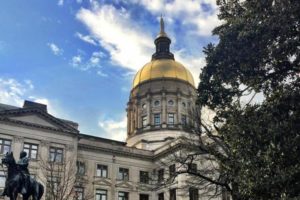
Georgia Senate bill opens some charter schools to dropouts ages 21 to 25
In proposed measure, adults between ages of 21 and 35 would be eligible for the program — and tutoring, free transportation, and child care would be provided for them.
With violence still surging, these states want to make it even easier to carry guns
wenty years ago, only one state allowed residents to carry firearms without a license. Tennessee just became the 19th state to adopt “permitless carry.”

U.S. Rep. Buddy Carter’s property tax squabble continues
Buddy Carter has challenged the property tax assessment for property he bought near the proposed Spaceport Camden site

Ralston unveils comprehensive bill to boost mental health services in Georgia
The measure seeks parity in pay for mental health providers compared to other health-care providers, strengthens workforce development initiatives aimed at addressing a shortage of mental-health workers and looks to help police departments forced to serve as first responders to calls involving people suffering from mental illness or substance abuse.

Elections chief calls for release of report that claims Georgia voting system vulnerable
The confidential report raised concerns about the steps state election officials have taken to improve security this election cycle and prompting Republican Gov. Brian Kemp to ask the Secretary of State’s Office to ensure the system’s integrity.
Support non-partisan, solutions-based investigative journalism without bias, fear or favor on issues affecting Savannah and Coastal Georgia.


You must be logged in to post a comment.